



On a bitterly cold evening in early 2012, I contemplated murder.
On the surface all seemed brilliant: a lead role at one of America’s top regional theatres; a cast stacked with New York veterans, including a Tony nominee; a noted director who’d go on to win two Tonys themselves. It was a great gig for a young actor. Until it wasn’t.
The rehearsal process was difficult. One lead was fired and replaced after one week. The script was opaque. New Haven was (presumably still is) cold and depressing.
We were deep in ‘Tech’—technical rehearsals, the final chaotic sprint before opening night. Actors stumbling over lines and blocking. Designers testing choices. Stage manager directing chaos. Director managing egos.
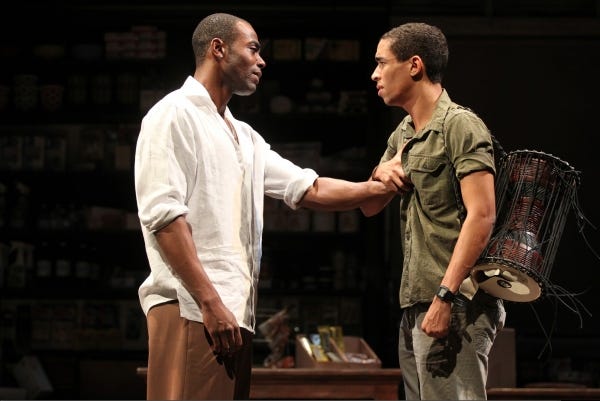
Morale was so low the director felt moved to assure us “we’re not gonna do a shitty show at Yale Rep, you guys.” And on this particular night, during a complex scene that involved smoke, lighting and sound cues firing in concert, the actor with the least to do—he was only in one scene—kept fucking up his lines, holding up the process and transforming what was merely tedium into torture.
Eventually I snapped—but not on the performer. I poured my self-righteous rage into my character. Out came a high-pitched, unhinged tantrum that had never come out in rehearsals.
I dreaded the post-rehearsal notes session, knowing I’d be shredded by the director. ”So,” they began when reaching this part of the show, “this section here—”
I cut them off: “I’m so sorry, I dunno what—”
”Everyone needs Clifton’s level of intensity at this point in the show.”
My childish tantrum turned out to be a happy accident. Abandoning all professionalism and channeling my emotions at the right moment actually improved the work.
And I was reminded of a crucial lesson I’d learned in conservatory:
What makes for a good citizen often makes for a boring artist.
In that spirit, here are five ‘bad behaviors’ you can adopt to ignite creative freedom:
1. BE SELFISH.
2 o’clock on a beautiful afternoon in northern California.
A troupe of moving men rapped on the door of a beautiful home in Palo Alto, and received no answer. They knocked again. This time there was a response:
“Go away!”
They would be refused entry for four hours, as the resident refused to allow his work to be interrupted.
The resident was Dr. Thomas Sowell.1
In polite society, sharing is caring. But those engaged in serious endeavor—be it creative, corporate, or intellectual in nature—must be ruthlessly selfish in protecting their work:
Selfish in protecting their process, selfish in protecting their time, and selfish in protecting their talent and vision.
Beyond selfishness, cultivating an “Arrogant Generosity” is also key: arrogant enough to believe your work is worth sharing, yet generous in pouring yourself into it…and, ultimately, in giving the work away.
2. BE MESSY.
If normal people lacked emotional regulation we’d all be having a very bad time.
But artists are not normal.
The blessed curse of the artist is the emotion roaring within; a beautiful fire threatening to consume him and others if allowed to rage unchecked. Feelings are the artist’s main currency; normal people work not to feel.
The responsibility of the artist is not to “control” emotion—which in polite society means “suppress”—but to feel it fully, regardless of discomfort, and guide it into useful channels.
Such sensitivity carries a cost. One must have tools and techniques to deal with the heightened suffering and neuroses that come with aching vulnerability. It’s no accident that genius and madness are linked—the genius may be suffering on a level the civilian cannot imagine, their soul possessed by the ideas and visions driving them to create.
The creative must welcome, integrate, and form a healthy relationship with his pain, demons, and manias.
It is by braving the storm within himself that the artist taps into a power greater than himself.
3. BE CHILDISH.
“Maturity” is boring.
It means mastering the managerial aspects of life, and dealing with horrors like obligations and responsibilities. Every functioning adult must do this. But the artist must cling to the child within: open, curious, bold, and present; acting with vivid imagination; careless of reputation.
Little girls create social gatherings with collections of dolls; little boys stage great wars with theirs (that’s why those dolls are “action figures”). For the child, “Hide and Seek” can mean life or death. A loss in “Red Light, Green Light” might crush them for a day.
They embody a valuable creative principle coined by one of my teachers:
”Playfully serious, and seriously playful.”
This level of fantastical abandon and investment would attract odd stares at the dinner table or the office. But like an electric emotional life (another well-known trait of children), it is essential to bold, free expression.
4. BE OFFENSIVE.
“That’s offensive!”
The perennial cry of the religious conservative and the puritanical progressive: the former distraught as their old taboos are shattered; the latter apoplectic (and violent) when their new taboos are refused.
Fear of causing offense has been weaponized to especially devastating effect in our cultural institutions, resulting in work that’s sanitized for everyone’s “safety” yet worthy of no one’s interest2.
But to quote revered comedian Patrice O’Neal:
”The mean shit is funny.”
It’s said that he who is a friend to all is an enemy to himself. For the artist, to obsess over not harming others is to straitjacket the creative self.
Harmlessness is seen by many as a virtue; for those who seek excellence, it is a vice.
5. FUCK PERFECTION.
”Is it not worthwhile to raise the whole question whether in poetry and prose we should prefer sublimity accompanied by some faults, or a style which—never rising above moderate excellence—never stumbles and never requires correction?”
— From “On the Sublime” (attributed to ‘Longinus’, 1st century AD)
Shakespeare was a genius; he also wrote Titus Andronicus.
Thriller is a masterpiece; “Baby Be Mine” is a skip.
Warren Beatty and Dustin Hoffman are legends. Yet they made Ishtar.
Imperfection in engineering could mean death. Imperfection in archery could cost medals.
But for the artist, imperfection is a byproduct of ambition.
Aim for the stars. No one will care about the times you missed.
Anyone striving to be better than average is already cutting against the grain.
For creatives seeking excellence, the rebellion is twofold.
They not only experience the loneliness inherent in doing things differently from their peers; to retain full access to their creative powers they bear the further burden of doing things differently from their entire society.
Venture forth anyway:
Be selfish. Be emotional. Be childish. Be offensive. Fuck perfection.
People will call you difficult. Unprofessional. Problematic.
Let them.
Your job isn’t to be liked.
Your job is to create something unforgettable.
Yours,
CD
This anecdote was shared with me by the son of one of Dr. Sowell’s closest friends.
At the same time, in an era with few taboos left to transgress, work created expressly to offend is equally boring: short on artistic merit, yet long on juvenile provocation.
I love this. It reminds me of my youngest who was a creative at heart. She composed music, wrote lyrics and had a beautiful voice. She taught herself to cut hair, crochet and make art out of almost anything, my cushions included. She was so authentically herself and so willing to walk to the beat of her own drummer. Sadly, she was not able to navigate her strong emotions and the hurts that were thrown at her, for being her, at 19; but was such a gift while we had her. Your well crafted thoughts remind me of how she used these qualities to make her art, but then would become her sweet and ironic self again. I am grateful when I find light along this hard road of loss. Thank you for being committed to real art and entertainment, this is what our souls need.
Sharing with my artist wife