

How I Became a Fascist.
My descent into political extremism.

The following is a chronicle of the pivotal moments that contributed to my current political radicalization.
A tale far too long for a single essay, it will be split into multiple parts over the coming weeks.
In sharing my devolution and its consequences, my hope is to warn others so that they might avoid my fate.
PART ONE:
Black No More.
WILLIAMSTOWN, MASSACHUSETTS.
Summer, 2007.
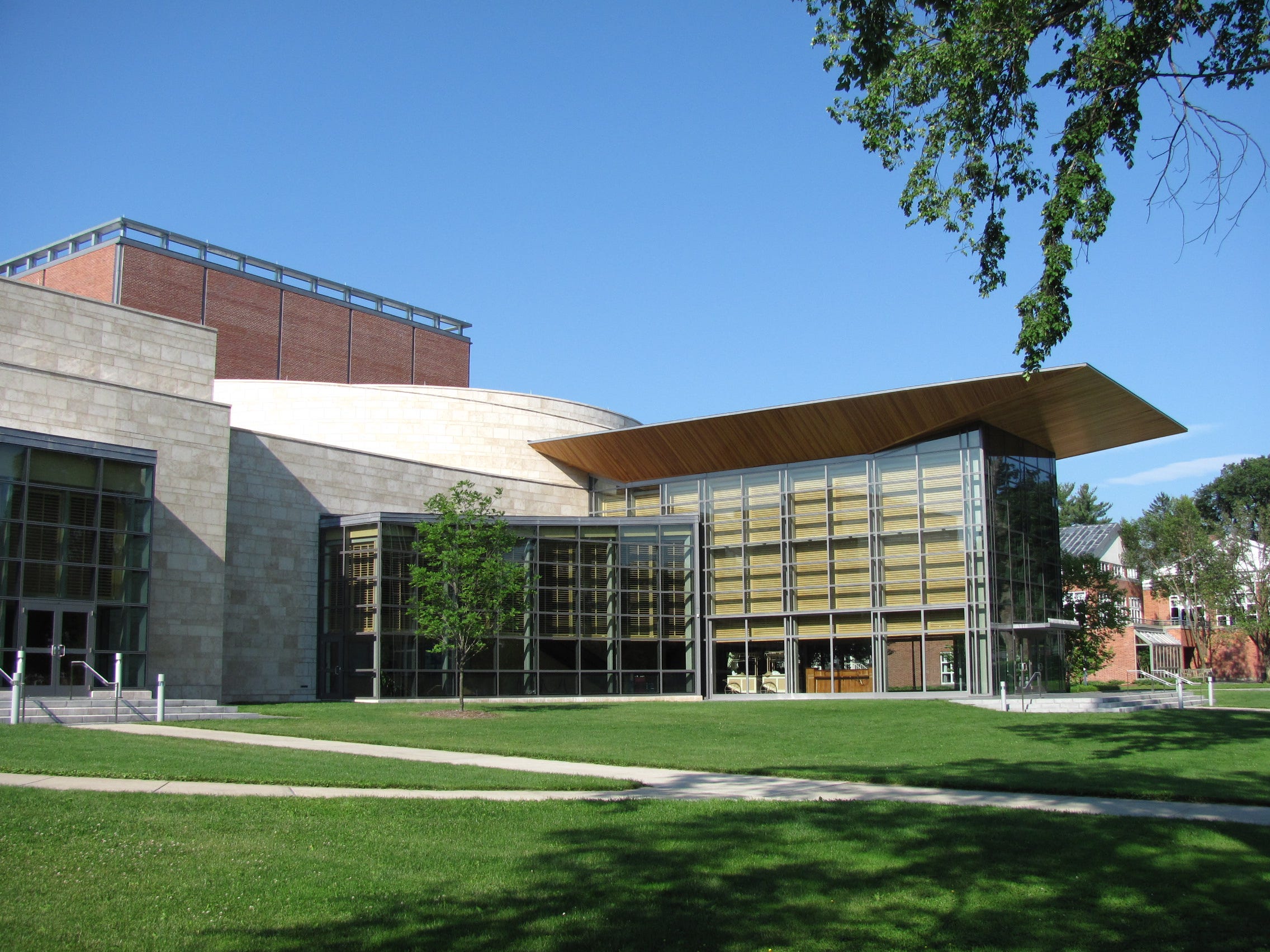
The seeds of my extremism were sown at a theatre company in the Berkshires. There, I underwent an ideological transformation which, years later, would have profound consequences.
I knew nothing about the Williamstown Theatre Festival other than that being invited was a big deal. Headquartered at Williams College, it promised the opportunity to work with some of the industry’s top talent: TV and film stars eager to return to the stage1; rising writers and directors; gifted actors-in-training, pulled from the nation’s top conservatories.
But instead of getting to hob-knob with the big wigs as expected, I experienced multiple microaggressions, macroaggressions and traumas that would forever alter my perspective as a black man.
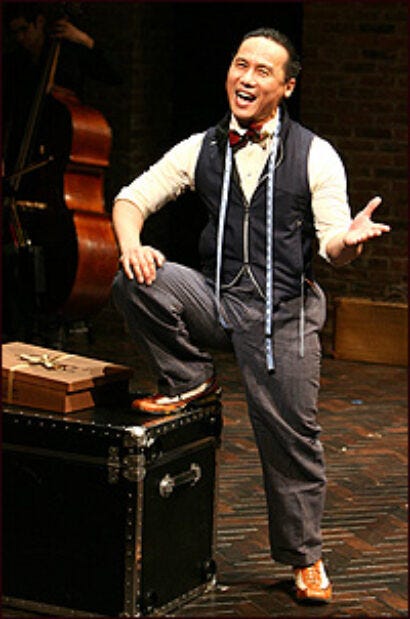
There were two dozen of us actors-in-training. We were the “top dogs” among the young talent, recruited from schools like Juilliard and NYU and Yale, and cast in supporting roles with the stars on the mainstage. But the gross inequities in the distribution of opportunity were troubling.
Several of my white peers not only got prominent supporting roles, but a couple were cast in more than one mainstage show. Meanwhile, of the three black performers in our “Talented 24”, two of us were little more than background dancers in that season’s big musical, and the one among us with any sort of substantial mainstage role was cast in a small part—as a butler.
The indignities didn’t end there:
Four aspiring young directors were also brought to the Festival, to assist and learn from the pros. Each was also expected to direct two one-act plays over the course of the summer, to be staged in the smaller theatre, and utilizing the Talented 24.
Auditions for the first round of one-acts took place hours after our arrival at the college. We shuffled into the large auditorium, and the four young directors were seated in the back. I was instantly alarmed at the lack of diversity among them, all four being white; but I buried my initial cynicism, and delivered what everyone present believed to be a powerful monologue2.
Sadly, my initial cynicism was validated once the callback lists went up.
None of the blacks—who, it later became clear, could easily have fit into any number of roles—received a callback for the first round of one-acts3.
The other black actors were willing to let it slide, but I was not. I complained to anyone who would listen, including the surprisingly sympathetic Artistic Director, the late Roger Rees. For their part, the directors were mortified and profusely apologetic.
No one was surprised when callbacks for the second round of one-acts prominently featured The Blacks at the top of every list. I was even cast as a lead in one of the plays. But the process had been irreparably tainted, inspiring a line of thinking that foreshadowed my descent into a dangerous ideology:
Am I being considered for these parts because I’m right for them, or am I merely a beneficiary of White Guilt?
As turbulent as my budding professional life was at this time, my grief was compounded by personal struggles.
It was these woes which would ultimately lead me fully down the path to extremism.
“Dude, you know what your problem is? There’s only two black girls here!”
One of the perks of being among the Talented 24 was in having a measure of status relative to the Festival’s eager and attractive interns. The advice I received from former Festival attendees boiled down to “don’t drink too much, and don’t have too much sex!” I’d done a fair bit of drinking and was having no sex.
My frustration became the subject of a late night pow-wow with two peers from the Talented 24, during which one volunteered his diagnosis of the problem: among the hundreds of interns at the Festival, only two were black women (one of them was engaged). Presumably, then, I’d spend the rest of the summer doomed to involuntary celibacy.
Of course his remark was nonsense—women of other races had long been attracted to me and obviously still were; the truth is that I lacked the courage to make any moves. But my colleague’s ignorance, on top of my casting woes, triggered a change in my thinking that would be the first step of a massive paradigm shift that would unfold in the coming years (and render me defenseless to the spread of a poisonous ideology):
I decided to give up on my obsession with race.
I decided I was done seeing the world through a racial lens; decided it was foolish to use my race as the focal point for every event in my life; decided it was reductive and dehumanizing to be endlessly evaluated in racial terms.
Above all, I decided that if anyone sees me as a Black Man before they see me as a Human Being, that’s their problem, not mine.
And there it was:
By refusing to place race at the center of my worldview and yearning to be valued as an individual, I’d become what’s known today as a “Fascist.”
NEW YORK CITY, NEW YORK.
June 6, 2020.
“I'm really sorry if I'm just re-opening your trauma by being probably the 2,433rd blundering white person to reach out to you.
I just want to say that I know the past couple of weeks/years/your entire life have been really tough, and I just want to be your friend and support you any way that I can.”
April4 wasn’t the 2,433rd “blundering white person” to contact me, but she also wasn’t the first. I’d gotten emails and DMs from several former castmates and coworkers, and even from representatives of institutions where I’d worked as an actor.
The tenor of each correspondence was the same:
“Are you okay?”
We know you’re hurting.
We’re sorry this is happening to you.
We need you to know that you are seen.”
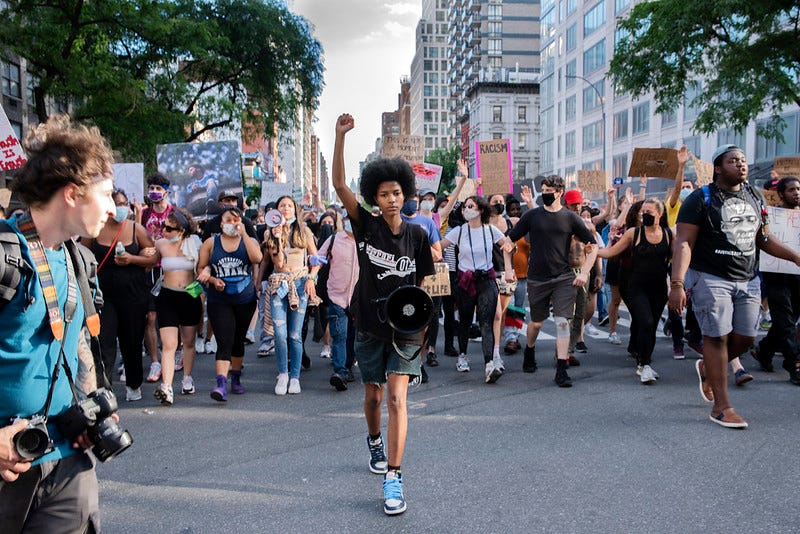
In May 2020, gut-wrenching footage of the final, undignified moments of a black Minneapolis man named George Floyd set America on fire. A white police officer had been filmed nonchalantly pinning an agitated and anguished Floyd face down on the pavement as he screamed for his mother and repeatedly gasped “I can’t breathe” before passing away. The clip sparked widespread outrage. The optics were especially sensitive in a nation polarized by Trumpism. A racial reckoning was in store.
But it had been 13 years since Williamstown. In the intervening years I’d been thoroughly cynicized.
By 2020 I’d caught onto the unfortunate pattern of black deaths being misrepresented by the press and exploited by activists and politicians. Six years earlier I’d perused the Black Lives Matter organization’s website, and concluded that it was interested not in helping black Americans but very much interested in advancing Krenshavian intersectionality.
Disturbed as I was by the original Floyd footage, I knew to wait for more information to emerge, felt no connection whatsoever to the event, and consequently was nowhere near as “traumatized” as my comrades presumed me to be.
Even worse, years earlier I’d made the mistake of falling in love with a woman who helped me internalize the notion that the world is not out to get me—the exact opposite of what most black American men are told to expect. Initially I resisted the idea, wary of embracing a such a white supremacist mindset5. But eventually I caved. I confess I saw improvement in every aspect of my life.
I’d devolved from the type of person strangers instinctively avoided into the type of person strangers approached to ask for directions. I became less guarded, less cynical, less angry, less angsty. I’d become attractive—someone people of all races wanted to work with, someone people of all races enjoyed being around. I felt truly confident, self-possessed, and free.
But I’d forgotten that Social Justice has neither time nor use for happy, successful minorities. I should’ve been ashamed: by internalizing a positive view of the world, I’d become divorced from my Blackness. I was no longer a militant upstart at Williamstown, but a rising New York talent that had graduated to sharing stages with Broadway stars.
I’d fallen out of step with the aggressive identitarianism of the progressive creative class.
I’d stopped viewing white people as The Enemy, and refused to demand their validation.
In other words,
I’d become a full-blown Fascist.
EPILOGUE
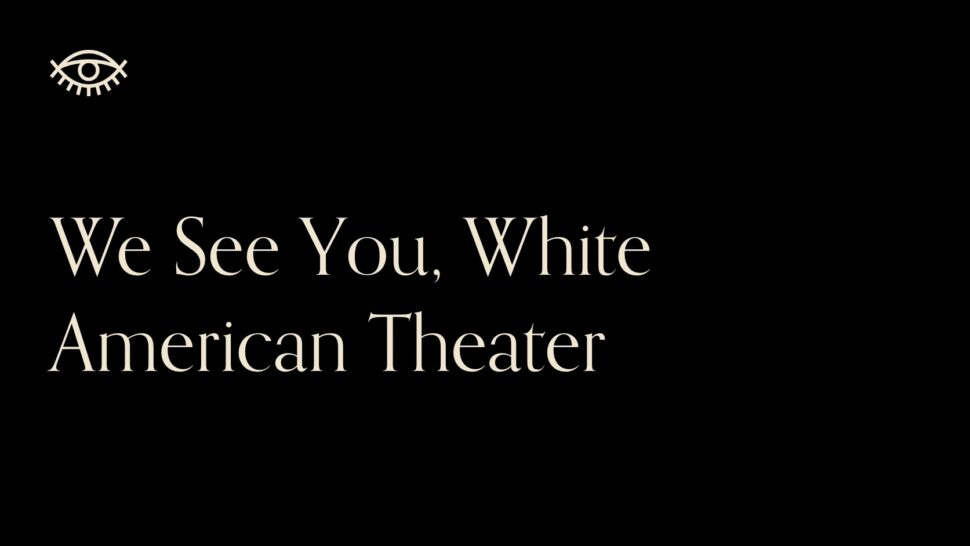
On June 8th—just two days after I got April’s email—a blistering manifesto titled “We See You, White American Theatre” sent shockwaves through New York’s theatre community.
The condemnatory document laid bare the white supremacist ethos of the theatre industry and community that had embraced and encouraged me since I was a teenager, had believed in me when I didn’t believe in myself, had kept me working far more frequently than most actors, and had eventually allowed me to make a decent living collaborating with Tony, Emmy and Oscar-caliber artists. Somehow this racist, oppressive industry had let me (and many of my black peers) slip through the cracks for years. But that’s neither here nor there.
The indictment sparked rapid, sweeping changes throughout the industry. DEI mandates and quotas were quickly codified; mandatory diversity trainings and workshops were imposed; Antiracism instantly became the new gospel, and books by intellectual heavyweights such as Ibram X. Kendi expected to be read back to front by every theatre professional; pre-show land acknowledgements became a trend, and there were now new rules about how whites were to conduct themselves around their BIPOC colleagues.
All of this, in response to the death of one black man in Minneapolis.6
One might suggest the above was an overreaction, that did long-term damage to the industry.
That’s exactly what a Fascist would say.
CD
In the next installment of this series, I’ll reveal how developing a positive masculine identity made me a Nazi.
Allison Janey, Wayne Knight and BD Wong were among the headliners that season. I also bumped into Kathleen Turner, who was directing a play that season, in one of the student dorms. “Hi, I’m Kathleen,” she rasped, as we shook hands. I’m unsure why she was in that building, but I’m certain I was the only one who thought it was kind of awesome.
The piece was from a play called “Before it Hits Home,” where a closeted jazz musician struggles to cope with a devastating AIDS diagnosis. It’s the piece that I’m certain got me into NYU. Later, people who weren’t even in the room at the time came up to me to tell me they’d heard about the piece I’d done.
One of the one-acts featured a gay character, who was eventually cast with a straight white male. One of my black actors was gay, would have been far more believable in the role, yet was not called back.
Not her real name.
For the record, my girlfriend was Asian. This would have shocked my Williamstown colleague.
Of course, they would argue that Floyd’s death was the final straw in a slew of unjustified, racist killings by cops. That is incorrect, but that’s what they would argue.